

What is the LinkedIn Algorithm?
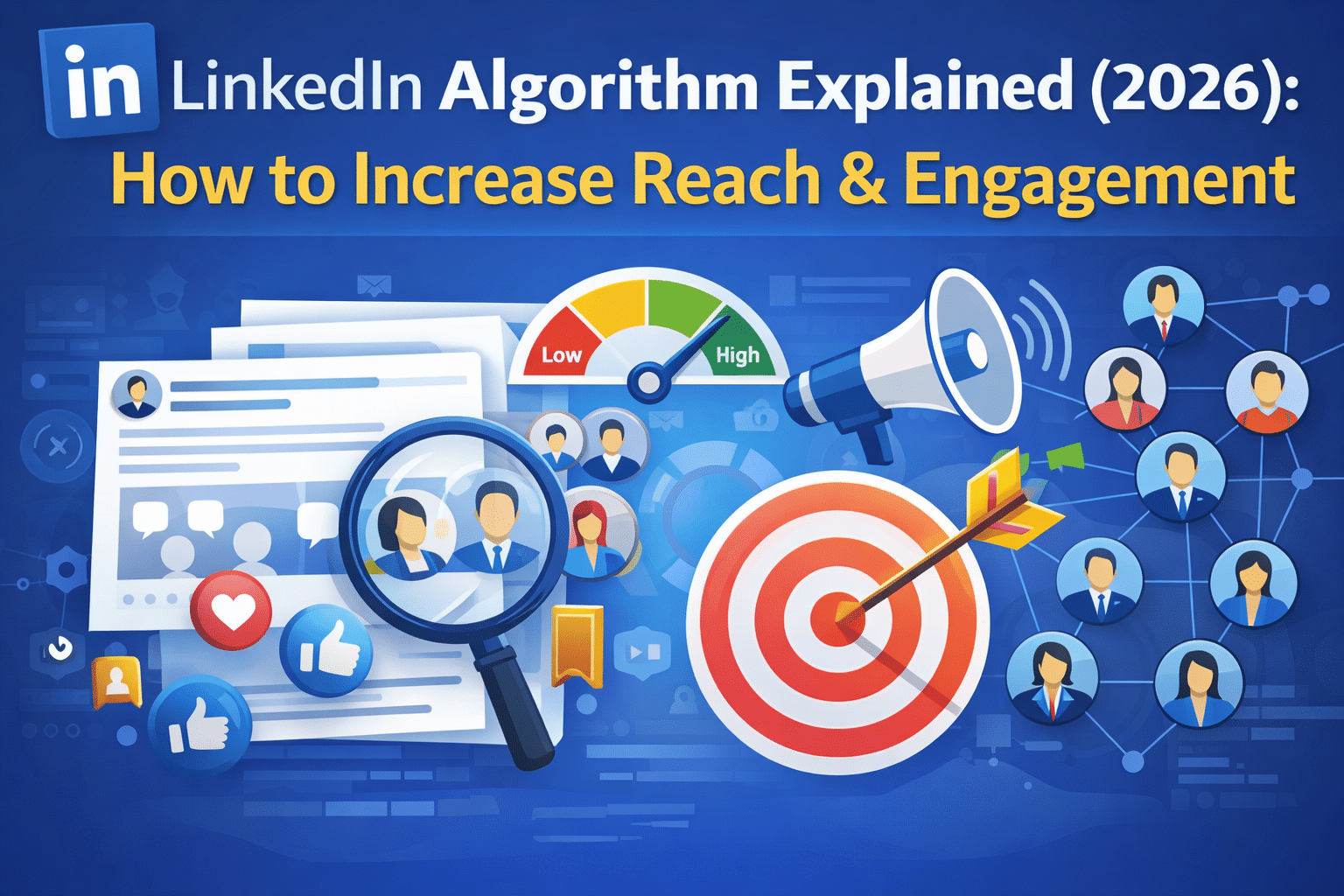
When people talk about the linkedin algorithm, they usually mean the system LinkedIn uses to decide which posts show up in your feed and how far they reach. In simple terms, the algorithm decides who sees your post, when they see it, and how many people it reaches.
To understand the linkedin algorithm explained simply- LinkedIn doesn’t show every post to everyone. Instead, it studies how users behave and then shows content that is more likely to keep people on the platform.
The main goal of the algorithm is to keep users engaged. If people spend more time reading, commenting, and interacting, LinkedIn benefits. That’s why the platform rewards content that gets attention and meaningful engagement.
When you focus on understanding linkedin algorithm, you realise something important:
LinkedIn does not want spammy content or random posts. It prefers content that people actually stop to read, comment on, or share.
This is also why your post doesn’t immediately reach thousands of people. The algorithm tests your content first. If it performs well early on, LinkedIn pushes it further. If not, the reach stays limited.
So the algorithm is not random, it’s a filter that decides whether your content deserves more visibility or not.’
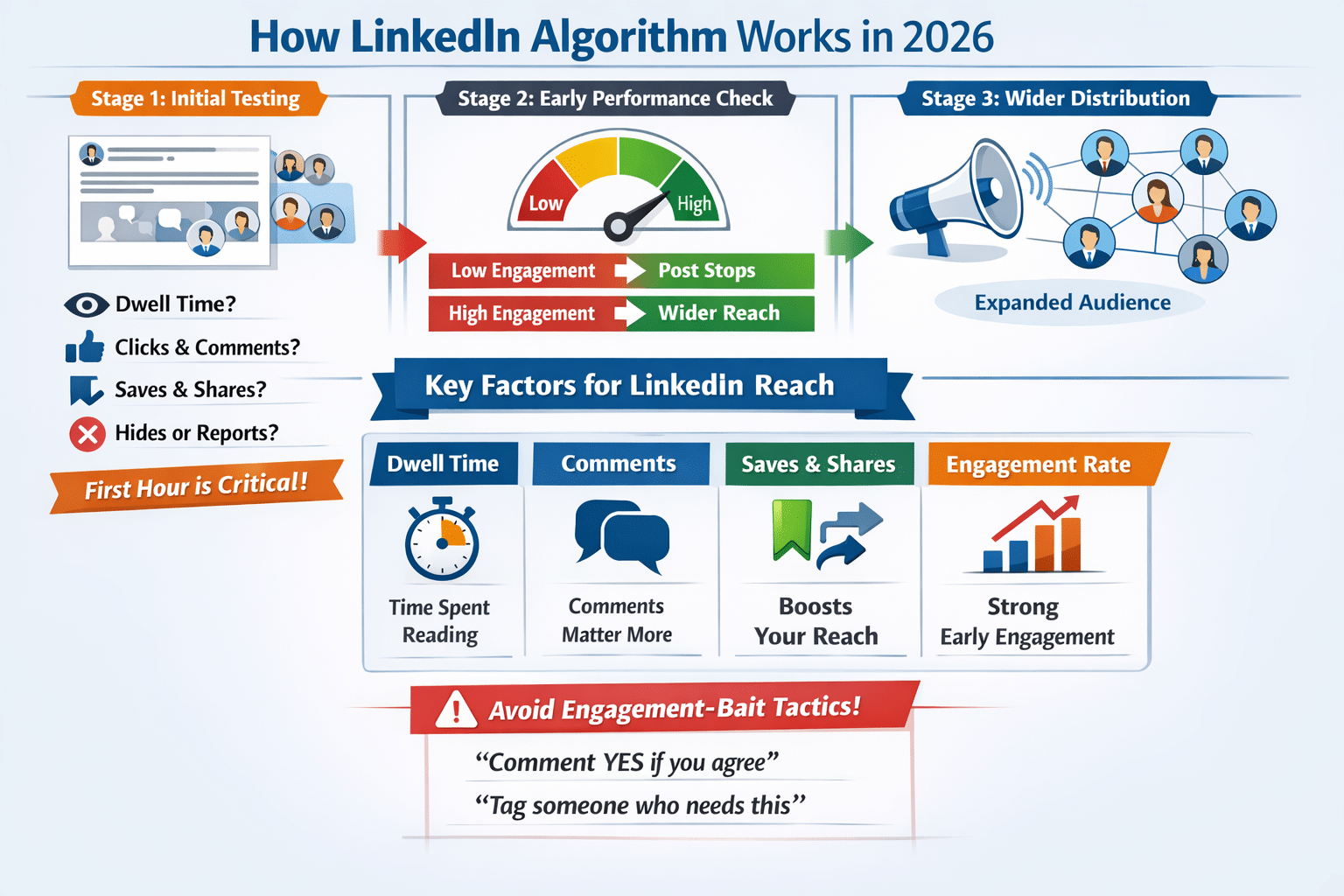
How LinkedIn Algorithm Works in 2026
Stage 1: Initial testing
When you publish, LinkedIn shows your post to a small slice of your connections and followers; typically a few hundred people depending on your network size. During this window, it measures:
- 1. Are people stopping to read? (dwell time)
- 2. Are they clicking, liking, or commenting?
- 3. Are they sharing or saving the post?
- 4. Are they hiding or reporting it?
This first hour is the most critical window. Engagement here determines whether your post advances or stalls
Stage 2: Early performance check
If your post gets good engagement in the first hour or two, the algorithm sees it as valuable. This increases your chances of getting wider reach.
If engagement is low, the post stops getting pushed.
Stage 3: Wider distribution
When your post performs well early, LinkedIn starts showing it to more people- including second-degree connections and sometimes even beyond your network. This is how posts go viral on LinkedIn.
Key Factors That Affect Your LinkedIn Reach
To understand linkedin ranking signals, you need to look at what LinkedIn actually measures when deciding reach.
1. Does dwell time matter on LinkedIn?
Yes, linkedin dwell time meaning is simple- it measures how long someone spends looking at your post. If people stop scrolling to read your post, it sends a strong signal that your content is valuable. Higher dwell time improves your reach because LinkedIn sees that people are genuinely interested.
If you want to improve dwell time practically, study how different content formats (like case studies, videos, and reports) keep users engaged in B2B marketing: Checkout this article linkedIn explaining different types of B2B content types that drive engagement
2. Are comments more important than likes?
Yes, While likes help, linkedin comments vs likes importance is very clear — comments matter more. A comment shows that someone found your content meaningful enough to respond. Comments usually increase reach more than simple likes because they create conversation.
3. Why saves and shares boost reach?
Saves and shares are very strong signals. They tell LinkedIn that your content is valuable enough for someone to come back to or show others. That’s why linkedin save and share importance has increased over time. These actions help push your content further.
4. How engagement rate impacts visibility
Linkedin engagement rate includes likes, comments, shares, clicks, and time spent on your post. If your engagement rate is strong early on, your post gets more visibility.
If engagement is weak, the algorithm reduces your reach.
This is why having a clear content angle matters— Checkout our LinkedIn B2B content strategy blog which would helps you create posts that naturally drive comments, saves, and meaningful interactions.
What no longer works?
LinkedIn has actively reduced reach for posts that use engagement-bait tactics: phrases like “comment YES if you agree” or “tag someone who needs this.” These triggered strong short-term metrics but drove low-quality engagement. The 2025–2026 algorithm updates specifically penalise patterns that look like engagement manipulation.
LinkedIn Algorithm for Different Content Types
Not all content performs the same on LinkedIn. The algorithm treats different formats differently.
1. How LinkedIn ranks text vs image posts
For regular posts, the linkedin algorithm for posts looks at how users interact. Simple text posts can work well if they are well written and start conversations.
Image posts and carousels often perform well because they increase dwell time. People swipe through slides or stop to look at visuals, which helps increase engagement.
2. How the LinkedIn video algorithm works
The linkedin video algorithm focuses on watch time and completion rate. If people watch most of your video, LinkedIn sees it as engaging and pushes it to more people.
Short, clear videos usually work better than long ones because people are more likely to watch them till the end.
3. Which content formats perform best in 2026
Based on current trends, these formats tend to perform well:
- 1. Carousels and document posts
- 2. Short, value-driven text posts
- 3. Story-based posts
- 4. Short videos
- 5. Educational content
The key is not the format alone, but how useful and engaging the content is.
LinkedIn Algorithm Hacks to Increase Reach
There is no magic formula, but there are practical linkedin algorithm hacks that consistently help improve reach.
1. Write strong hooks: The first two lines matter a lot. If people stop scrolling to read, your dwell time improves. This directly helps increase linkedin reach organically.
2. Encourage real comments: Ask simple questions, invite opinions, or share personal experiences. Real conversations improve your linkedin engagement rate.
3. Post when your audience is active: For most B2B audiences, Tuesday through Thursday between 8–10am and 12–1pm (in your audience’s time zone) tend to generate the highest early engagement. Check your LinkedIn analytics to validate this for your specific followers.
4. Use carousels and short posts: Carousels increase dwell time. Short, punchy text posts improve readability. Both help with linkedin organic growth tips.
5. Reply to comments quickly: Early replies keep the conversation going and improve visibility. The algorithm rewards active posts.
6. Stay consistent: You don’t need to post daily, but you do need consistency. A few posts every week build momentum over time.
LinkedIn Algorithm for B2B & Lead Generation
LinkedIn is the most effective B2B platform in the world for a simple reason: decision-makers use it professionally, which means content that demonstrates expertise reaches the right people in the right mindset.
The algorithm helps B2B creators by amplifying posts that spark professional discussion. A post about a real client problem, an industry mistake you’ve seen, or a lesson from a failed project will almost always outperform a post announcing your services.
A few things that work specifically for B2B:
1. Share the problem before the solution. Posts that describe a pain point attract comments from people experiencing the same thing, which is exactly the audience you want.
2. People trust people more than companies. Personal profiles consistently outperform company pages on LinkedIn. If you’re doing B2B, your personal profile is your most valuable channel. Checkout our blog on LinkedIn Personal Branding: How to Build Authority, Visibility, and Trust to learn how to optimize your personal linkedIn profile.
3. Specificity beats generality. “3 things I learned closing a $200k deal” will outperform “Tips for better sales” every time, both for the algorithm and for attracting qualified leads.
Latest LinkedIn Algorithm Updates (2026)
LinkedIn keeps updating its algorithm to improve user experience. Recent linkedin algorithm updates focus more on quality and authenticity.
What has changed?
- 1. More importance on meaningful comments
- 2. Higher value for saves and shares
- 3. More weight on dwell time
- 4. Less reach for low-value or repetitive content
What no longer works?
- 1. Engagement pods
- 2. Comment-for-comment tricks
- 3. Clickbait hooks
- 4. Low-quality content made just to post frequently
These tactics may give short-term results, but they no longer work well long-term.
What you should focus on now?
- 1. Quality over quantity
- 2. Real conversations
- 3. Helpful content
- 4. Consistent presence
- 5. Clear niche and positioning
If you focus on these, the algorithm works in your favor.
Final Checklist to Beat the LinkedIn Algorithm
Here is a simple checklist to improve your reach.
Do’s
- 1. Write clear and simple hooks
- 2. Post consistently
- 3. Focus on one or two consistent topics
- 4. Use carousels for complex ideas
- 5. Reply to comments quickly
- 6. Track what works and repeat it
Don’ts
- 1. Don’t Start with “I’m excited to share…”
- 2. Don’t post only promotional content
- 3. Don’t copy trends blindly
- 4. Don’t ignore comments
- 5. Don’t write long text without breaks
- 6. Don’t change topics too often
- 7. Repost the same content repeatedly
Following these linkedin algorithm tips consistently will improve your reach over time.
Final Word
The LinkedIn algorithm rewards content that people genuinely want to read and engage with. It penalises shortcuts. The best strategy in 2026 is the same as it has always been, be useful, be consistent, and make it easy for people to respond.
If you apply the principles in this blog consistently over 60–90 days, you will see measurable improvement in your reach and engagement.
If you want to grow faster, build a strong personal brand, or generate real leads from LinkedIn, our team at Digitally Bugged can help. From content strategy to profile optimization and full LinkedIn growth systems, we help professionals and businesses turn LinkedIn into a lead-generating channel.
Frequently Asked Questions (FAQs)
1. How does the LinkedIn algorithm work in 2026?
The LinkedIn algorithm works by testing your post with a small audience first. It measures engagement signals like dwell time, comments, shares, and clicks. If the post performs well, it gets distributed to a wider audience, including second-degree connections.
2. What are the most important LinkedIn ranking signals?
The most important LinkedIn ranking signals are dwell time, comments, shares, saves, and overall engagement rate. Comments and shares carry more weight than likes because they indicate deeper interaction.
3. Does LinkedIn use AI in its algorithm?
Yes, LinkedIn uses AI and machine learning to personalize content feeds. It analyzes user behavior, interests, and past interactions to decide which posts to show.
4. Why is my LinkedIn post getting low views?
Low views usually happen when your post does not perform well in the initial testing phase. Poor hooks, low dwell time, or lack of engagement in the first hour can limit reach.
5. How can I increase my LinkedIn reach organically?
To increase LinkedIn reach, focus on writing strong hooks, encouraging meaningful comments, posting consistently, and using engaging formats like carousels and short videos.
6. Are comments more important than likes on LinkedIn?
Yes, comments are more important than likes because they signal meaningful engagement. Posts with more comments are more likely to be pushed to a wider audience.
7. What is a good engagement rate on LinkedIn?
A good LinkedIn engagement rate typically ranges between 2% to 5%, but this can vary depending on your industry, audience size, and content quality.
8. What type of content performs best on LinkedIn in 2026?
Content that performs best includes carousels, short text posts, storytelling content, educational insights, and short videos. Content that sparks discussion tends to perform better.