

In today’s B2B landscape, relying solely on marketing or sales doesn’t cut it anymore. Disconnected teams, misaligned goals, and inconsistent data often lead to wasted effort and lost opportunities.
A high-performing business thrives on synergy — and that’s where a B2B sales and marketing funnel comes in. It’s a unified framework that connects marketing’s top-of-funnel awareness with sales’ bottom-of-funnel conversions, ensuring every lead moves efficiently from discovery to close.
In this guide, you’ll learn how both the B2B sales funnel and B2B marketing funnel work, the key stages of each, and how aligning them can drive measurable ROI and sustainable growth.
What Is a B2B Sales Funnel and How Does It Work?
The B2B sales funnel maps how prospects move from initial contact to a closed deal. Unlike B2C transactions, B2B deals take longer and involve multiple stakeholders — making structure and clarity essential.
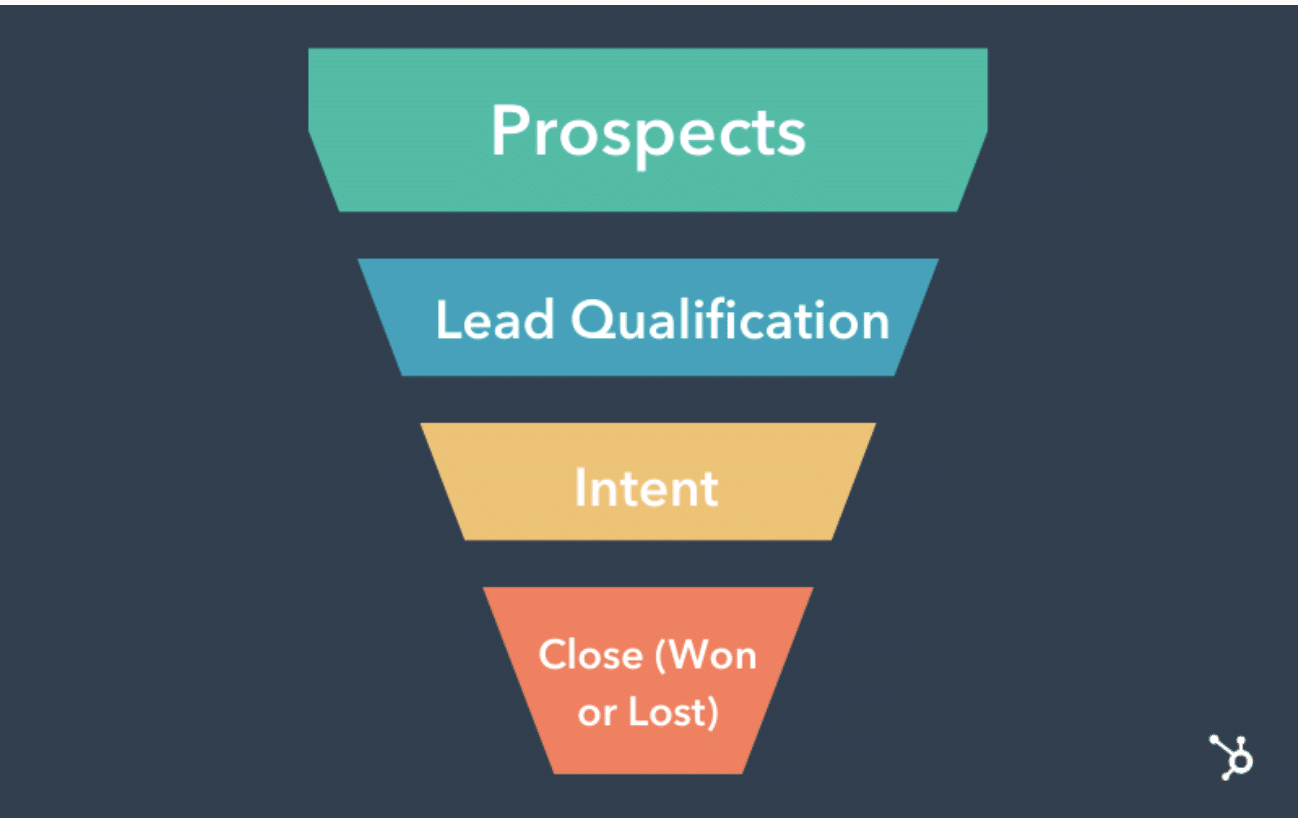
According to the HubSpot model, the b2b sales funnel or sales funnel is divided into four key stages:
1. Prospects
This stage begins when potential customers first come into contact with your business — often through marketing campaigns, website visits, or referrals. The goal is to attract prospects who fit your Ideal Customer Profile (ICP) and initiate early engagement.
2. Lead Qualification
Here, the focus shifts to determining which prospects are worth pursuing. Marketing and sales teams work together to identify Marketing Qualified Leads (MQLs) and Sales Qualified Leads (SQLs) using lead scoring criteria like engagement level, company size, and intent signals. Strong sales–marketing alignment ensures only qualified leads move forward, saving time and improving close rates.
3. Intent
Leads in this stage begin showing clear buying intent — they request product demos, pricing, or proposals. Sales reps engage them with personalized communication, answer objections, and position your solution as the best fit for their business needs. It’s also where trust-building and problem-solving matter most.
4. Close (Won or Lost)
This is the decision point. Sales reps work to finalize the deal through negotiation and follow-up. A “won” deal becomes a customer; a “lost” deal provides insight into potential improvements in the funnel. After the close, maintaining post-sale communication ensures satisfaction, renewals, and referrals — key components of long-term customer retention.
The B2B Marketing Funnel and Its Stages Explained
While the sales funnel focuses on turning qualified leads into customers, the B2B marketing funnel creates the foundation — generating awareness, nurturing engagement, and building the trust needed to convert prospects into sales opportunities.
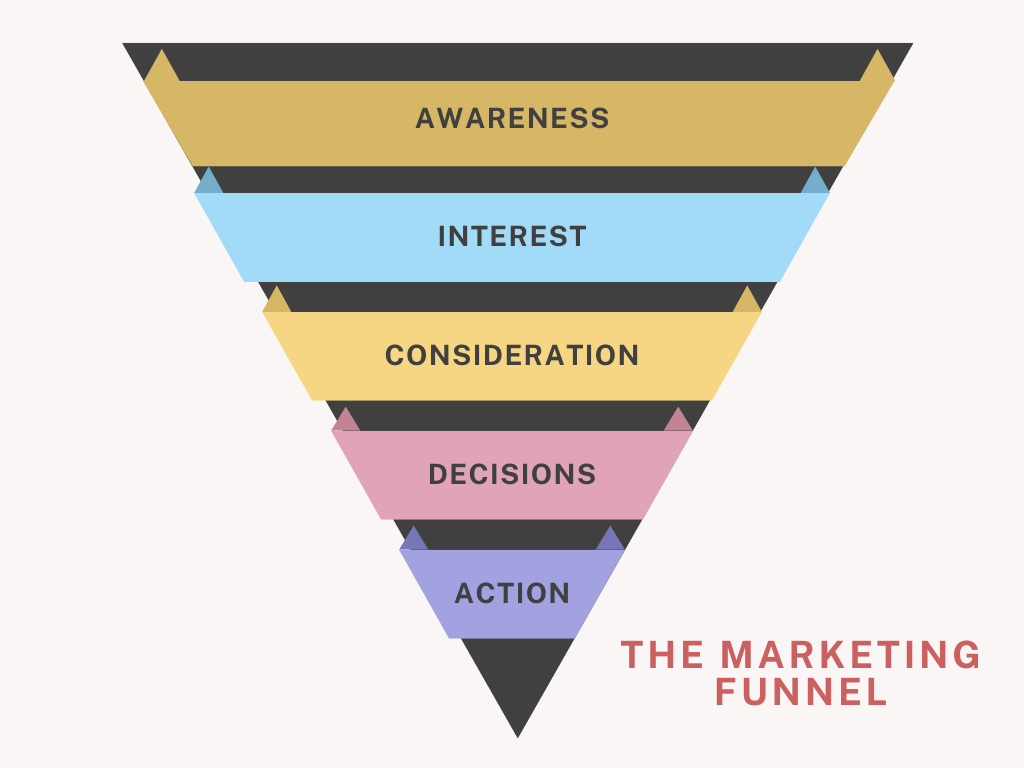
The marketing funnel follows 5 essential stages:
1. Awareness
This is the Top of the Funnel (TOFU) where your primary goal is to make potential buyers aware of your brand. Activities like SEO, social media marketing, webinars, and thought leadership content help attract new audiences. Content here should educate rather than sell — positioning your brand as a trusted authority.
2. Interest
Once awareness is established, the goal is to spark interest. Prospects begin interacting with your brand — reading blogs, signing up for newsletters, or attending virtual events. Your marketing team can use targeted content, remarketing, and social engagement to nurture curiosity and highlight how your product solves industry pain points.
3. Consideration
At this Middle of the Funnel (MOFU) stage, prospects are actively comparing solutions. They evaluate features, pricing, and ROI. This is where your B2B marketing funnel must deliver in-depth, value-driven content like case studies, whitepapers, and comparison guides. Marketing automation and lead-nurturing campaigns are essential here to keep your brand top of mind.
4. Decision
In this phase, potential buyers are nearing conversion. Your content and messaging should directly support their decision-making — think free trials, demos, or tailored consultations. Sales and marketing teams collaborate to deliver personalized experiences that build confidence and reduce friction before purchase.
5. Action
This is the Bottom of the Funnel (BOFU) — where prospects take the final step. Whether it’s scheduling a demo, requesting a proposal, or making a purchase, this action moves them directly into the B2B sales funnel for qualification and closing. The focus here is conversion — using strong calls-to-action and frictionless experiences.
Align Sales and Marketing to Build a Unified Funnel That Drives More Sales-Qualified Leads
Common Misalignments Between Sales and Marketing
Even high-performing B2B teams face challenges when sales and marketing don’t sync.
The main issues include:
Different Lead Definitions: Marketing might pass leads that aren’t ready to buy, frustrating sales teams.
Poor CRM Adoption: Inconsistent data entry leads to tracking issues and unclear handoffs.
No Shared Metrics: Each team measures success differently — marketing by MQLs, sales by revenue.
Quick Fix: Syncing Of Sales And Marketing Team For Growth
To eliminate friction and improve collaboration, both teams need to work from the same playbook — one that aligns metrics, processes, and communication. Here’s how to make it happen:
Define Shared KPIs:
Start by setting mutual performance goals that matter to both departments — such as Lead-to-Customer Rate, Deal Cycle Time, or Revenue per Qualified Lead. When sales and marketing are measured by the same outcomes, accountability naturally improves, and both teams start focusing on what drives actual revenue instead of vanity metrics.Standardize Lead Qualification Criteria:
Create a clear definition of what makes a lead “marketing-qualified” (MQL) versus “sales-qualified” (SQL). Use lead scoring to evaluate engagement — for instance, assigning higher scores to prospects who download key assets, attend webinars, or request demos. This ensures sales only receives high-intent leads ready for outreach, reducing wasted effort.Hold Regular Funnel Review Meetings:
Schedule monthly or bi-weekly meetings where both teams review the funnel’s performance together — from awareness to close. Discuss conversion rates, lead quality, and content effectiveness. These sessions help identify what’s working, uncover bottlenecks, and keep both sides aligned on shared growth goals.
When these three steps are implemented consistently, the B2B sales and marketing funnel becomes a single, unified system — where marketing fuels the top of the funnel with qualified opportunities, and sales efficiently turns them into revenue.
B2B Sales Funnel Examples You Can Learn From
Example 1: SaaS Funnel – From Awareness to Subscription
Funnel Flow:
Content Marketing → Demo Request → Free Trial → Subscription
How It Works:
A SaaS company started by creating valuable TOFU (Top-of-Funnel) content — blog posts, LinkedIn articles, and gated eBooks targeting specific pain points. Prospects who engaged with this content were automatically added to an email nurturing sequence offering case studies and demo invitations.
Once users booked a demo, the sales team personalized outreach based on usage intent data (e.g., product features viewed). By aligning this flow between marketing automation (HubSpot) and sales CRM (Salesforce), they achieved smoother handoffs and better conversion tracking.
Results:
40% higher lead-to-demo conversion rate
28% shorter trial-to-subscription time
Improved forecasting accuracy through CRM data sync
Key Takeaway:
Educational content paired with intent-based follow-ups can drastically increase Sales-Qualified Leads (SQLs) for SaaS businesses.
Example 2: Agency Funnel – Building Trust from Outreach to Retainer
Funnel Flow:
LinkedIn Outreach → Value-Driven Consultation → Proposal → Retainer
How It Works:
A digital marketing agency used LinkedIn automation to target CMOs and marketing heads in their niche. Instead of pitching services immediately, they offered a free “Performance Funnel Audit” as a consultation.
This created early trust and allowed the team to pre-qualify prospects during the audit. Afterward, tailored proposals converted high-intent prospects into monthly retainers. Marketing supported the process with remarketing ads and email sequences to re-engage cold leads.
Results:
ROI improved by 35% through multi-channel nurturing
Lead-to-client conversion jumped by 22%
Consultation-to-proposal rate doubled within three months
Key Takeaway:
Offering free, high-value consultations early in the funnel can accelerate trust-building and improve long-term client retention — especially in service-based industries.
Example 3: Manufacturing Funnel – Turning Trade Shows into Revenue
Funnel Flow:
Trade Show → Lead Capture → Email Nurturing → Sales Follow-up → Purchase Order
How It Works:
A B2B manufacturing company relied heavily on trade shows to generate leads but struggled to maintain contact afterward. They modernized their funnel using a lead capture app that synced attendee data to their CRM in real time.
Marketing then triggered automated follow-up sequences — sharing product catalogs, case studies, and comparison charts. Sales reps received notifications to reach out once a lead engaged with high-intent assets (like pricing pages or RFQ forms).
Results:
25% shorter deal cycles due to instant post-event engagement.
Higher lead reactivation rate from automation-based nurturing.
- Revenue growth of 18% YoY from improved trade show ROI
Key Takeaway:
Combining offline lead generation (like trade shows) with online automation tools thus ensurign no lead is lost, improving both conversion speed and ROI.
Check out our blog on LinkedIn B2B Marketing Strategies & Lead Generation to learn how to run high-performing LinkedIn campaigns for your B2B business that fuel your marketing funnel and eventually drive sales.
Key Takeaways
A high-performing B2B sales and marketing funnel isn’t just about generating leads — it’s about building a unified system where data, alignment, and analytics work together to drive predictable growth.
Unified B2B Sales and Marketing Funnel Formula
Performance + Alignment + Analytics = ROI
When sales and marketing share goals, use connected tools, and track the same KPIs, every part of the funnel becomes more efficient — from awareness to retention.
Key Metrics for Continuous Improvement
Keep a close eye on metrics that reveal both efficiency and growth potential:
Lead Quality: Are you attracting the right prospects?
Conversion Velocity: How quickly are leads moving through your funnel?
Customer Lifetime Value (CLV): Are you maximizing long-term revenue from existing clients?
Continuous tracking and optimization of these metrics help you forecast revenue more accurately and scale your funnel sustainably.
Final CTA
Ready to build a B2B sales and marketing funnel that consistently drives ROI?
Align your sales and marketing funnel for measurable growth — book a 1:1 funnel strategy session with me, Nikita Bhavasar Shah, at Digitally Bugged.
FAQs
Q1: What is the B2B sales funnel process?
It maps how prospects move from awareness to close — through stages of Prospecting, Lead Qualification, Intent, and Close.
Q2: What are the 7 Ps of B2B marketing?
Product, Price, Place, Promotion, People, Process, and Physical Evidence — all essential to improving funnel efficiency.
Q3: What are the 4 types of B2B markets?
Producers, Resellers, Governments, and Institutions — each requires a customized funnel strategy.
Q4: What is the 95–5 rule in B2B marketing?
Only 5% of buyers are ready to purchase now; the remaining 95% are future prospects. Nurture both through consistent engagement.
Q5: How do sales and marketing work together in a B2B funnel?
Marketing attracts and nurtures leads, while sales converts them. Alignment ensures smooth handoffs, higher lead quality, and stronger ROI.

Founder at Digitally Bugged