

What Is LinkedIn Engagement?
Before we dive into the “how,” we need to clarify the “what.” In simple terms, LinkedIn engagement refers to any active interaction a user has with your content. It is the difference between someone simply scrolling past your post and someone stopping to interact with it.
What counts as engagement on LinkedIn?
The platform tracks several types of interactions to determine how successful a post is. These include:
- 1. Reactions: Likes, loves, and insightful clicks.
- 2. Comments: The most valuable form of engagement because they spark a dialogue.
- 3. Shares: When someone finds your value high enough to show their own network.
- 5. Dwell Time: How long a user stays on your post reading or watching.
- 6. Clicks: Clicking “see more” on a text post or clicking a link.
LinkedIn impressions vs engagement
It is easy to get these two confused. Impressions represent the number of times your post appeared on someone’s screen. If 1,000 people scrolled past your post, you have 1,000 impressions. However, if none of those people stopped to react or comment, your LinkedIn engagement is zero. High impressions without engagement often mean your hook was strong enough to show up, but your content was not interesting enough to keep them there.
Why LinkedIn Engagement Matters for B2B Brands
For B2B brands, LinkedIn is not just a social media site; it is a primary lead generation tool. High engagement does more than just make you feel good; it builds a bridge between your brand and your future clients.
When your posts receive consistent interaction, you build authority. In the B2B world, people buy from people they trust. If your target audience sees your team providing value and engaging in smart conversations, that trust is built long before the first sales call. This is why LinkedIn engagement for B2B brands is a critical metric for growth.
CEO Branding and Employee Advocacy
In 2026, the human element is more important than ever. People relate to individuals more than they do to faceless corporate logos. This is why ceo branding and LinkedIn engagement go hand in hand. When a CEO shares their perspective, it humanizes the company.
Additionally, employee advocacy for LinkedIn growth is a massive multiplier. When your team shares company updates or industry insights, they reach networks that the main brand page cannot. This collective effort increases the overall footprint of the brand and creates a web of credibility around your services.
What Is a Good Engagement Rate? Benchmarks You Can Use
How do you know if your efforts are actually working? You have to compare your results against industry standards. A good engagement rate on LinkedIn is not a fixed number; it depends on your industry, your follower count, and the type of content you post.
LinkedIn engagement benchmarks
Generally, the average engagement rate on LinkedIn sits between 1% and 3%. If you are hitting these numbers, you are doing a decent job. However, high performing accounts often see rates between 5% and 10%.
| Account Type | Average Rate | High Performance |
| Personal Profiles | 2% – 4% | 7% + |
| Company Pages | 0.5% – 1.5% | 3% + |
| Niche Tech/SaaS | 1.2% | 4% |
Factors that affect your percentage include your niche and how active your followers are. For example, the industry average engagement rate LinkedIn users see in healthcare might differ from those in digital marketing. The key is to track your own LinkedIn analytics engagement rate over time to see if you are improving.
How to Calculate LinkedIn Engagement Rate
Calculating your performance is straightforward. You do not need complex software to get a basic pulse on your content health.
The LinkedIn engagement formula
To find your LinkedIn post engagement rate, use this simple calculation:
Engagement Rate = (Total Interactions/Total Impressions) *100
For example, if your post had 50 likes, 10 comments, and 5 shares, your total interactions are 65. If that post reached 2,000 people (impressions), your calculation would look like this:
(65 / 2,000) * 100 = 3.25%
You can check these numbers easily by looking at the LinkedIn analytics engagement rate section under each post or in your profile dashboard. Keeping an eye on this ensures you know which topics are resonating and which are falling flat.
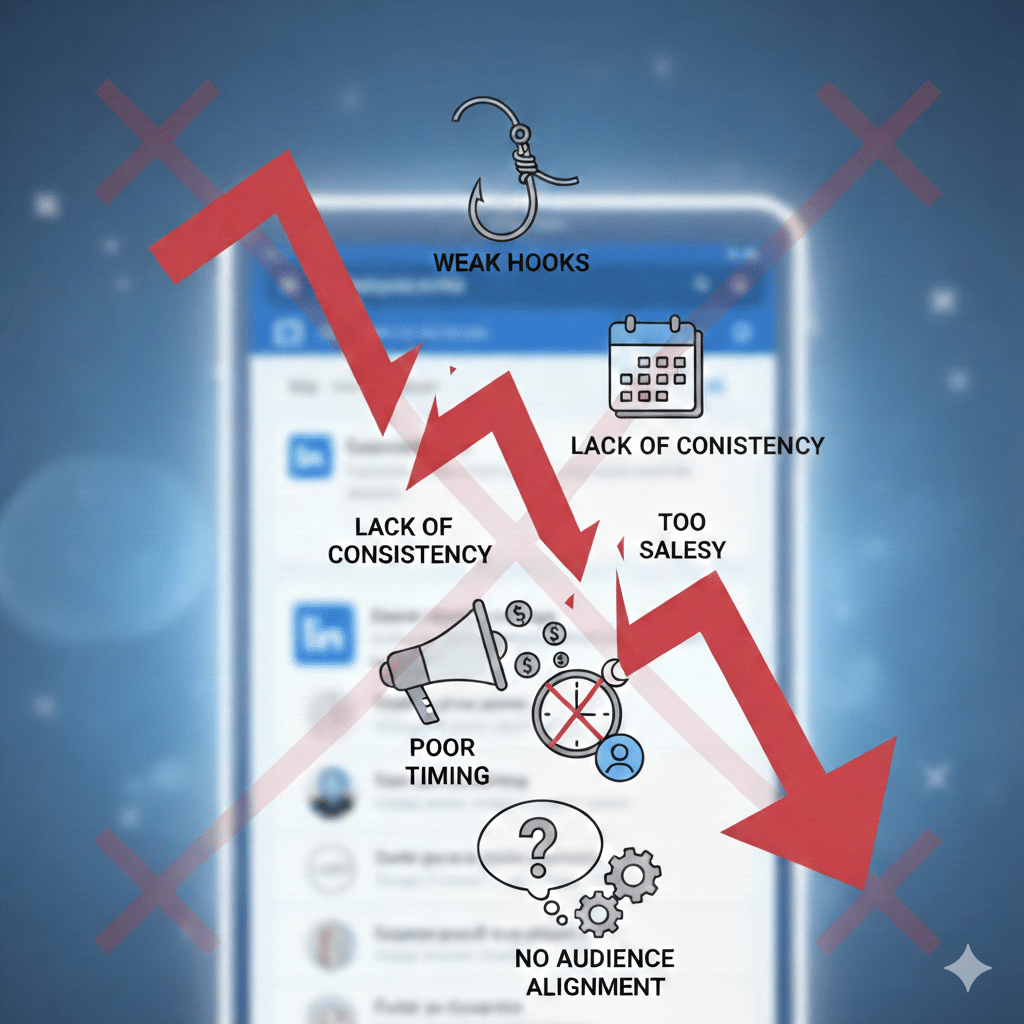
Why Engagement Drops on LinkedIn
It can be frustrating to see your numbers take a dip. If you are wondering why LinkedIn engagement is low for your account lately, it usually comes down to a few common culprits.
Reasons for decreasing LinkedIn reach
- Weak Hooks: If the first two lines of your post do not grab attention, users will not click “see more.”
- Lack of Consistency: The algorithm favors creators who show up regularly. If you post once a month, your reach will naturally suffer.
- Being Too Salesy: LinkedIn users are there to learn and network. If every post is a sales pitch, people will tune you out.
- Poor Timing: If you post when your audience is asleep, you miss the “golden hour” of early engagement that helps a post go viral.
- No Audience Alignment: You might be talking about things your followers simply do not care about.
Understanding these reasons for decreasing LinkedIn reach is the first step toward fixing your LinkedIn engagement strategy.
Proven Strategies to Boost LinkedIn Engagement in 2026
To truly increase engagement on LinkedIn, you need a system. At Digitally Bugged, we believe in a mix of creative storytelling and data-backed tactics. Here are ten strategies to help you get more engagement on LinkedIn.
Strategy 1: Clarify Positioning & Audience Persona
You cannot be everything to everyone. To boost LinkedIn engagement organically, you must speak to a specific person. Define your niche. Are you talking to CFOs in the pharma industry or marketing managers in tech? When your content is specific, the right people feel compelled to comment because the topic feels relevant to their daily life.
Strategy 2: Follow High-Performing Post Structures
The best posts usually follow a specific flow:
- 1. The Hook: A bold statement or a question.
- 2. The Insight: The content of the post where you share value.
- 3. The CTA: A call to action that encourages a response.
- 4. The Comment Loop: Responding to every comment to keep the conversation going.
Strategy 3: Increase Visibility Through Consistency
You do not need to post every day, but you should aim for at least 3 times a week. Create “topic pillars” so you never run out of ideas. For example, Monday could be a “Lesson Learned,” Wednesday a “Case Study,” and Friday an “Industry Prediction.”
Strategy 4: Use Thought-Provoking CTAs
- “Which of these three options would you choose for your team?”
- “Have you ever faced this challenge in your current role?”
- “What is one thing you would add to this list?”
These prompts make it easier for people to answer, which helps you how to get more LinkedIn comments.
Strategy 5: Share Stories and Behind-the-Scenes
Data is great, but stories stick. Share a mistake you made or a project that didn’t go as planned. Transparency builds deep connections. People love to see the “human” side of a brand, which is a great best way to grow LinkedIn engagement.
Strategy 6: Distribute Content via Comments
Do not just post and leave. Spend 15 minutes before and after you post commenting on other people’s content. This increases your visibility and encourages those creators to return the favor on your posts.
Strategy 7: Optimize Profile & Creator Mode
Ensure your profile is a landing page, not a resume. Turn on Creator Mode to access better LinkedIn engagement tracking tools and to show off your top topics via hashtags.
Strategy 8: Activate Employee Advocacy
Encourage your team to engage with brand posts within the first hour. This early activity acts as one of the key LinkedIn viral post triggers.
Strategy 9: Use Trending Formats
In 2026, the algorithm loves variety. Use PDF carousels for educational content and short-form video for personal insights. This variety is essential for a modern LinkedIn engagement strategy.
Strategy 10: Post Authority-Building Content
Share frameworks and “how-to” guides. When you show people how to solve a problem, they are likely to save your post and share it with their colleagues.
Content Formats That Drive High Engagement
Not all LinkedIn engagement posts are created equal. Some formats are naturally better at stopping the scroll.
- 1. Carousel Posts: These are excellent for carousel posts and LinkedIn engagement because they increase dwell time. Each slide a user clicks counts as an interaction.
- 2. Video Snippets: Short, captioned videos (under 90 seconds) perform well. Video posts LinkedIn engagement is high because it allows the audience to hear your voice and see your personality.
- 3. Polls: These are the easiest way to get quick interactions. Use them to gather industry opinions.
- 4. Narrative Text Posts: A well-written story with plenty of white space is still one of the most effective ways to engage an audience on LinkedIn.
Algorithm Signals & Posting Practices
The LinkedIn algorithm is a machine that looks for signals to determine content quality. One of the most important LinkedIn algorithm engagement signals is “Dwell Time.” This is the amount of time someone spends looking at your post. If you write a long, engaging story, the algorithm assumes the content is high quality.
Another factor is early engagement velocity. If your post gets ten comments in the first thirty minutes, LinkedIn will show it to a much wider audience. This is why knowing the best time to post on LinkedIn for engagement is vital. Generally, Tuesday, Wednesday, and Thursday mornings (between 8:00 AM and 10:00 AM) are the “sweet spots” for professional audiences.
Tools and Analytics to Track Engagement
You cannot manage what you do not measure. To stay ahead, you should use specific LinkedIn engagement tracking tools.
- 1. LinkedIn Native Analytics: The built-in dashboard provides a great overview of your LinkedIn post engagement rate and follower demographics.
- 2. Scheduling Tools: Using LinkedIn scheduling tools for engagement like Buffer or Hootsuite allows you to stay consistent without being glued to your phone.
Expert Tips, Prompts, and Examples
If you are feeling stuck, here are a few quick LinkedIn engagement tips to get your creative juices flowing.
Hook Prompts
- 1. “Most people think [Common Belief] is true. Here is why they are wrong.”
- 2. “I spent 10 hours doing [Task] so you don’t have to. Here are the 3 key takeaways.”
- 3. “The biggest mistake I made in my first year as a [Job Title] was…”
Engagement Hacks
- 1. The First Comment: Post your link in the first comment rather than the main body of the post to avoid a reach penalty.
- 2. Tagging: Only tag people if they are actually mentioned or if they will definitely find the post relevant. Random tagging can look like spam.
- 3. The “See More” Trick: Ensure your first three lines are so interesting that the user has to click “see more.”
Conclusion
Building a strong presence on LinkedIn in 2026 is about more than just numbers; it is about building a community. By focusing on a clear LinkedIn engagement strategy, you can move from being a silent observer to a recognized industry leader. Remember that LinkedIn engagement is a two-way street. If you want people to talk to you, you must be willing to talk to them.
Consistency, value, and a human touch are the pillars of growth. If you implement even a few of the strategies mentioned above, you will see a noticeable shift in your reach and conversions.
Are you looking to take your brand’s digital presence to the next level? At Digitally Bugged, we specialize in creating integrated marketing strategies that drive real results. Whether it is SEO, content strategy, or media planning, we are here to help your brand grow.
Frequently Asked Questions (FAQs)
Q1: How often should I post on LinkedIn to maintain high engagement?
Q2: Does the LinkedIn algorithm penalize posts with external links?
Yes, LinkedIn prefers to keep users on its platform. Posts with external links in the main body often see a reach penalty. A common workaround is to post your content as text/image and add the link in the first comment, or use the “Edit Post” method to add the link after the post has been live for a few minutes.
Q3: What is the “Golden Hour” on LinkedIn?
The “Golden Hour” refers to the first 60 minutes after you hit publish. The algorithm measures how quickly people react and comment during this time. High engagement velocity in the first hour signals to LinkedIn that the content is high-quality, prompting it to show the post to a wider audience.
Q4: Is LinkedIn Creator Mode still necessary in 2026?
While LinkedIn has integrated many “Creator” features into the standard profile, turning it on is still beneficial. It allows you to feature specific hashtags, highlights your “About” section, and provides access to advanced analytics that help you track your engagement rate more accurately.
Q5: Why is my LinkedIn engagement high but my lead generation low?
his usually means your content is “entertaining” but not “intent-focused.” You might be getting likes from a general audience, but not your target buyers. To fix this, shift your strategy toward Authority-Building content (Strategy 10) that addresses specific pain points your ideal customers face.