

Introduction
In the last few years, LinkedIn personal branding has become more important than ever. Earlier, having a LinkedIn profile was enough. Today, just having a profile does not help unless people can clearly understand who you are, what you do, and why they should trust you.
Personal branding on LinkedIn means building a strong professional identity so that when someone visits your profile, they immediately know your expertise. This is useful for founders, consultants, job seekers, freelancers, B2B professionals, and even students who want to grow their careers.
When you focus on building a personal brand on LinkedIn, you are not only creating a profile, you are building your reputation online. The way your profile looks, the content you post, and the way you interact with others all together create your professional image.
One of the biggest reasons LinkedIn works so well for this is because the platform is built for professionals. Unlike other social media platforms, LinkedIn is focused on work, business, and industry conversations. This makes LinkedIn professional branding very powerful for people who want to grow their network, get noticed, and build trust.
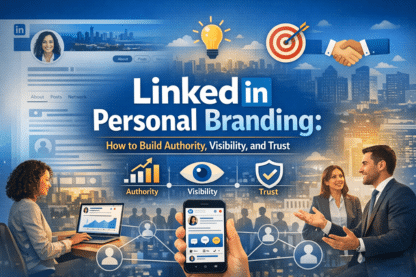
A strong presence also improves LinkedIn visibility. The more active and consistent you are, the more people see your name, your ideas, and your work. Over time, this visibility turns into opportunities like job offers, client inquiries, partnerships, and collaborations.
In this guide, we will explain what linkedin personal branding really means, why it matters, and how you can build a strong and trusted presence step by step.
What Is LinkedIn Personal Branding?
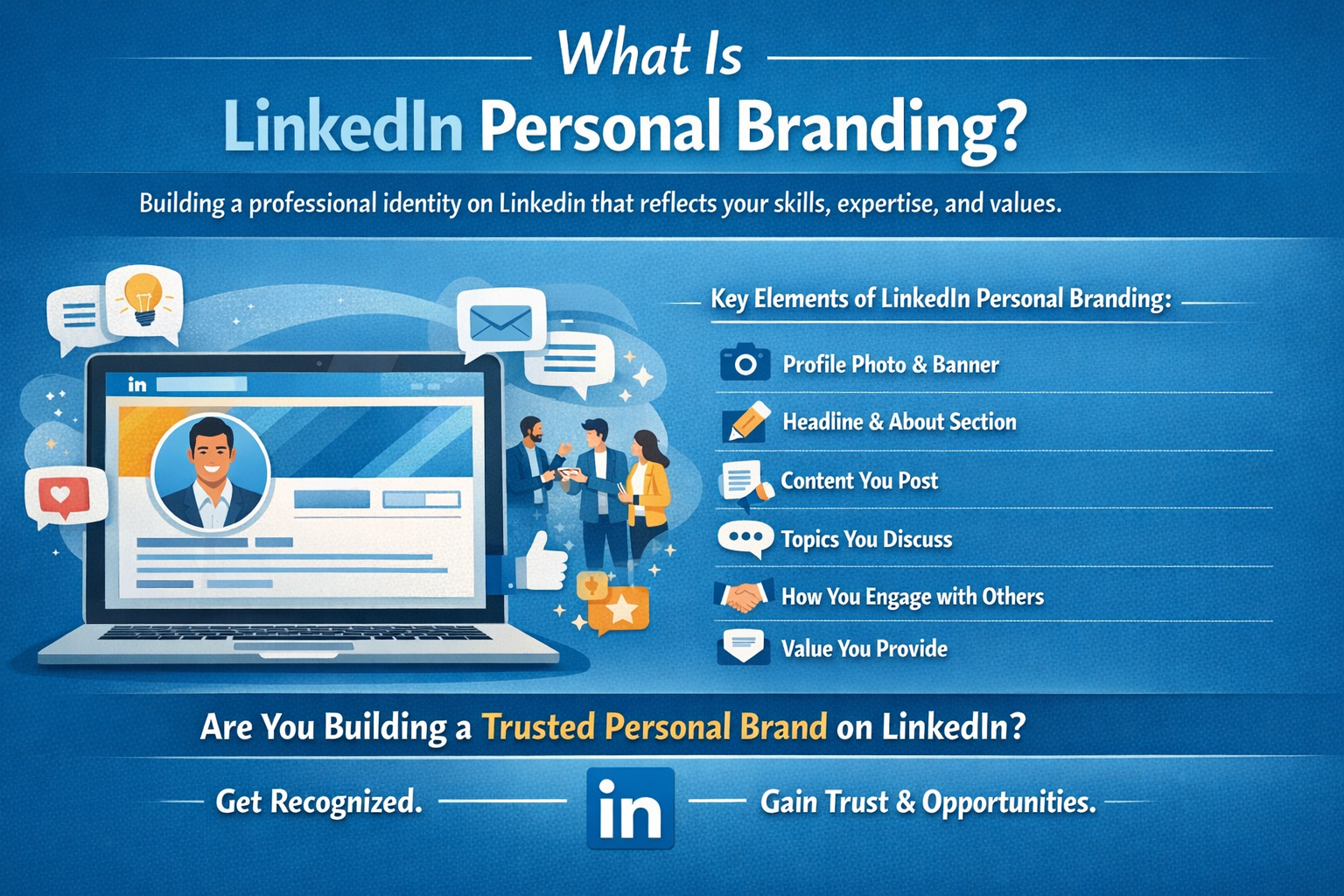
LinkedIn personal branding refers to the process of building a professional identity on LinkedIn that reflects your skills, expertise, and values. Instead of using LinkedIn only as a resume, personal branding turns your profile into a platform where people recognize you, remember you, and trust you.
Many people create a profile but never actively build their presence. They add their experience, upload a photo, and leave the account inactive. This is not personal branding. Personal branding on LinkedIn means being intentional about how you appear, what you talk about, and what people associate with your name.
In a LinkedIn context, branding includes:
- 1. Your profile photo and banner
- 2. Your headline and About section
- 3. The type of content you post
- 4. The topics you talk about
- 5. The way you interact with others
- 6. The value you provide to your network
When all these elements are aligned, you create strong LinkedIn brand positioning. People start to see you as someone who knows a specific topic, industry, or skill. A good personal brand also improves LinkedIn credibility. When someone visits your profile and sees clear expertise, consistent content, and active engagement, they are more likely to trust you. This trust is what turns connections into opportunities.
So, instead of asking, “Do I have a LinkedIn profile?” the better question is,
“Am I building a recognizable and trusted personal brand on LinkedIn?”
Why Is Personal Branding Important on LinkedIn?
Many professionals underestimate how important personal branding has become. Today, people search your name before they talk to you, hire you, or work with you. If your profile looks incomplete or inactive, it creates a weak impression. This is why personal branding on LinkedIn has become so important.
One of the biggest benefits is LinkedIn authority building. When you regularly share useful ideas, experiences, or opinions related to your field, people begin to see you as someone who understands the industry. Over time, this builds trust, and trust leads to more opportunities.
Another major advantage is better LinkedIn visibility. LinkedIn shows active profiles more often in search results and feeds. When you post consistently and engage with others, your name starts appearing in front of the right audience, including recruiters, clients, and industry professionals.
Strong personal branding also improves LinkedIn credibility. A well-written profile, clear headline, and meaningful content make you look more reliable. People are more likely to connect with someone who looks professional and active.
For business owners and consultants, B2B personal branding on LinkedIn can directly help in getting leads. Many clients prefer working with individuals they trust instead of companies they don’t know. When your personal profile shows expertise, people feel more comfortable reaching out.
The same is true for entrepreneurs.
Founder personal branding on LinkedIn can help attract investors, partners, and even employees. When a founder shares ideas, experiences, and insights regularly, the business also becomes more credible.
In short, personal branding helps you stay visible, trusted, and relevant and on a professional platform like LinkedIn, that can make a huge difference in your career or business growth.
Key Elements of a Strong LinkedIn Personal Brand
Building a strong linkedin personal branding strategy is not about one thing. It is a combination of profile setup, content, consistency, and the way you interact with people on the platform. When all these parts work together, your profile starts looking professional and trustworthy.
Here are the main elements that make a personal brand strong on LinkedIn.
- Clear niche or expertise- The first step in LinkedIn brand positioning is clarity. People should understand what you do within a few seconds of visiting your profile.
If your profile talks about too many unrelated things, it becomes hard for others to remember you. Choose a clear niche or area of expertise and keep your content focused around it. This makes your personal brand stronger and easier to recognize.
- Fully Optimized Profile- Before you post a single thing, your profile needs to do its job. That means a professional photo, a clear headline, a well-written About section, and an up-to-date experience section. A sparse or outdated profile quietly signals that you’re not serious, even if your content is excellent.
- A Headline That Does More Than State Your Job Title- Your headline follows you everywhere on LinkedIn: search results, comments, connection requests. Most people waste it by writing only their job title. Instead, use it to explain what you do and who you help.
Instead of: Marketing Manager
Try: Marketing Manager | Helping B2B brands grow through content strategy
- Consistent Tone Across Everything- Your posts, comments, and profile should all feel like they come from the same person. If your content jumps from industry news to lifestyle posts to motivational quotes with no cohesion, your brand message gets lost. Consistency is what makes people start to associate you with a particular topic and that association is the foundation of thought leadership.
- Content That’s Actually Worth Reading- Posting regularly matters. Posting useful content matters more. The posts that build authority are the ones that share real insights, genuine experience, and honest opinions, not recycled advice that everyone has already seen.
- Active, Genuine Engagement- Building a brand on LinkedIn isn’t a broadcast exercise. Commenting meaningfully on others’ posts, replying to every comment you receive, and joining conversations in your field all increase your visibility and signal that there’s a real person behind the profile.
How to Build a Personal Brand on LinkedIn Step by Step?
If you want to start building a personal brand on LinkedIn, the best approach is to follow a clear step-by-step process. Many people post randomly without a plan, and that is why they do not see results.
Here is a practical method you can follow.
1. Identify your niche and audience
Before you start posting, you need to decide what you want to be known for. This is the foundation of building a personal brand on linkedin.
Ask yourself:
- 1. What topics do I understand well?
- 2. What industry do I want to grow in?
- 3. Who do I want to attract: recruiters, clients, founders or professionals?
When your niche is clear, your linkedin brand positioning becomes stronger. People should be able to say, “This person talks about this topic.” Trying to talk about everything usually weakens your personal brand.
2. Optimize your LinkedIn profile
The next step is linkedin profile optimization. Your profile should clearly show your expertise even before someone reads your posts.
Focus on these parts:
- 1. Profile photo – clear and professional
- 2. Banner – simple but meaningful
- 3. Headline – explain what you do and who you help
- 4. About section – tell your story and experience
- 5. Featured section – show your best posts or work
Experience and skills – keep them updated
Good linkedin headline optimization and profile setup make your personal brand look more serious and reliable.
Your profile should answer one question: Why should someone follow or connect with you?
3. Create a clear content strategy
Posting without a plan usually leads to inconsistency that is why you need a linkedin content strategy for personal branding.
Decide your content themes. For example:
- 1. Industry insights
- 2. Personal experiences
- 3. Tips and lessons
- 4. Opinions on trends
- 5. Case studies
This helps you stay consistent and makes your linkedin creator strategy stronger.
A good linkedin content strategy usually includes a mix of:
- 1. Educational posts
- 2. Personal stories
- 3. Professional opinions
- 4. Helpful tips
4. Share valuable and consistent content
Consistency is one of the biggest factors in linkedin authority building. You do not need to post every day, but you should post regularly when people see your posts again and again, your linkedin visibility increases.
You can share:
- 1. Things you learned at work
- 2. Industry insights
- 3. Mistakes and lessons
- 4. Opinions on trends
- 5. Advice for others
Storytelling works very well for linkedin thought leadership because people connect more with real experiences than with generic tips.
5. Engage with the right audience
Posting alone is not enough. A strong linkedin engagement strategy also includes interacting with others.
You can do this by:
- 1. Commenting on industry posts
- 2. Replying to comments on your posts
- 3. Connecting with relevant people
- 4. Joining conversations in your field
This helps in linkedin network building and makes your profile more active. When you engage regularly, your linkedin professional presence becomes stronger, and people start noticing you more often.
6. Track and improve your branding strategy
Personal branding is not a one-time task.You should keep checking what works and what does not.
Look at:
- 1. Which posts get more engagement
- 2. How many profile visits you get
- 3. What type of content people respond to
- 4. What topics bring new connections
As your content improves, your linkedin visibility growth also increases, and your personal brand becomes stronger.
LinkedIn Content Strategy for Personal Branding
A strong linkedin content strategy for personal branding is one of the biggest factors behind a successful personal brand. Many people optimize their profile but do not stay active, and because of that, their visibility stays low. Content helps you stay in front of your network and show your expertise over time. When you post regularly, people start recognizing your name, your ideas, and your work.
A good linkedin content strategy should not be random. You should decide the type of content you want to share and stay consistent with it.
Here are some content types that work well for personal branding.
- Educational posts– These posts share knowledge, tips, or lessons related to your field. Educational content builds trust and supports linkedin thought leadership because people start seeing you as someone who understands the topic.
- Personal experience posts– Sharing your own experiences makes your content more relatable. You can talk about challenges, mistakes, career lessons, or things you learned at work. This type of content works well for building connection and improving your linkedin professional presence.
- Industry opinion posts- Opinion posts show your thinking and help in linkedin authority building. You can share your views on trends, changes in the industry, or common problems people face. When done correctly, this also improves engagement because people like to share their own opinions.
- Case studies and results– If you work with clients, teams, or projects, you can share results and learnings. This type of content is very useful for consultants, founders, and B2B professionals. It supports b2b personal branding on linkedin because people trust real examples more than general advice.
- Tips, lists, and carousel-style posts– Short tips, step-by-step posts, and carousel content work well because they are easy to read. This format also fits well with a consistent linkedin creator strategy.
- Posting consistency– You do not need to post every day, but you should post regularly.
2–4 posts per week is enough for most people.
Common Mistakes to Avoid in LinkedIn Personal Branding
Many people start personal branding on LinkedIn but stop after a few weeks because they do not see results. In most cases, the problem is not the platform, but the mistakes in the approach.
Avoiding these common errors can make your branding much more effective.
- Being too generic – If your profile and content look like everyone else, people will not remember you. Strong personal branding needs clear positioning. Your profile should show what you do and what you are known for. This is an important part of linkedin branding strategy.
- Inconsistent posting – Posting once in a month and then disappearing does not help in building visibility. Personal branding needs consistency. Without regular activity, your linkedin visibility and engagement stay low.
- Poor profile optimization – Many people focus only on posting but ignore linkedin profile optimization. If your profile looks incomplete, people may not take you seriously even if your content is good. Your headline, photo, about section, and experience should all support your personal brand.
- Talking only about yourself – Personal branding does not mean only talking about your achievements. People follow profiles that give value. Good content should teach, explain, or start conversations, not just promote yourself.
- No engagement with others – If you only post and never comment, your growth will be slow. LinkedIn works better when you interact with others. A good linkedin engagement strategy includes commenting, replying, and connecting with people in your field.
- Copying trends without a personal voice – Following trends is fine, but copying everything makes your brand look weak. Your content should still sound like you. Strong personal branding comes from clarity and consistency, not from copying viral posts.
Best Practices for Growing Your LinkedIn Personal Brand
- Building a strong brand takes time, but following a few simple practices can make the process easier.
- Be consistent– Consistency is the base of every linkedin personal branding strategy. Posting regularly, updating your profile, and staying active helps people remember you.
- Stay clear about your niche– Your content should always connect to your expertise. Clear positioning helps in linkedin authority building and makes your profile easier to understand.
- Write in a natural voice– You do not need complicated words to sound professional. Simple and clear writing improves linkedin credibility because people trust what they understand.
- Provide value before selling– People do not like profiles that only promote services. Share useful insights first, and opportunities will come naturally. This is especially important for founder personal branding on linkedin and consultants.
- Build relationships, not just followers– Connections matter more than numbers. Talking to the right people improves your network quality and increases real opportunities. This also supports long-term linkedin visibility.
- Keep profile and content aligned– Your profile, headline, and posts should all show the same message. When everything matches, your brand looks stronger and more professional.
Who Needs LinkedIn Personal Branding?
Many people think linkedin personal branding is only for influencers, but that is not true. It is useful for almost every professional who wants to grow their career or business.
- Founders– Founder personal branding on linkedin helps build trust for the company. People often connect with the person before trusting the brand.
- Consultants– Consultants benefit a lot from personal branding because clients prefer working with experts they can see and understand. A strong profile also supports the work of a linkedin personal branding consultant.
- Coaches and freelancers- Coaches, freelancers, and independent professionals need visibility to get clients. Personal branding helps them show expertise without always running ads.
- Job seekers– Recruiters often search LinkedIn before shortlisting candidates. A strong profile improves chances of getting noticed. This is why linkedin professional branding is important even for students and early-career professionals.
- B2B professionals– In B2B industries, trust is very important. That is why b2b personal branding on linkedin can help in building credibility, generating leads, and growing business relationships.
- Agency owners and marketers– People in marketing, agencies, and consulting benefit from personal branding because their content itself becomes proof of their skills.
Should You Hire a LinkedIn Personal Branding Consultant?
Some people prefer building their brand on their own, while others choose to work with a linkedin personal branding consultant. Both options can work, depending on your time, experience, and goals.
A consultant can help if:
- 1. You are not sure how to position yourself
- 2. You do not have time to manage content
- 3. Your profile is not getting visibility
- 4. You want faster growth
- 5. You need a clear linkedin personal branding strategy
Working with a linkedin personal branding agency can help in profile optimization, content planning, and engagement strategy. This is useful for founders, executives, and professionals who want a strong presence but cannot manage everything themselves.
However, before hiring anyone, you should check:
- 1. Their own LinkedIn profile
- 2. Their content quality
- 3. Their experience with personal branding
- 4. Their approach and strategy
The best linkedin personal branding consultant will not just write posts for you, but will help you build a clear and consistent brand. For many professionals, starting on their own is enough. But when you want faster growth or better positioning, expert help can save time and effort.
Frequently Asked Questions (FAQs)
1. What is LinkedIn personal branding?
LinkedIn personal branding is the process of creating a strong professional identity on LinkedIn by showcasing your skills, expertise, and experience. It helps people understand who you are, what you do, and why they should trust you.
2. Why is personal branding important on LinkedIn?
Personal branding on LinkedIn is important because it increases your visibility, builds trust, and creates career or business opportunities. A strong personal brand can help you attract recruiters, clients, partnerships, and industry recognition.
3. How do I start personal branding on LinkedIn?
To start personal branding on LinkedIn:
- 1. Choose a clear niche or expertise
- 2. Optimize your profile (photo, headline, About section)
- 3. Create a content strategy
- 4. Post consistently
- 5. Engage with your audience
4. How often should I post on LinkedIn for personal branding?
You should post 2 to 4 times per week for effective personal branding. Consistency matters more than frequency, so maintain a schedule you can follow long term.
5. What type of content works best for LinkedIn personal branding?
The best content types include:
- 1. Educational posts (tips, insights)
- 2. Personal experiences and stories
- 3. Industry opinions
- 4. Case studies and results
- 5. Step-by-step or list-based posts